Beaucarnea recurvata
|
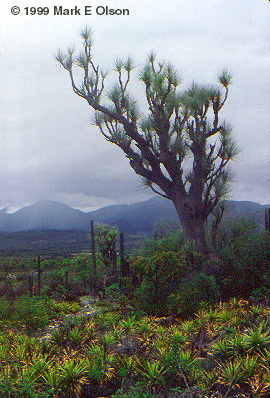
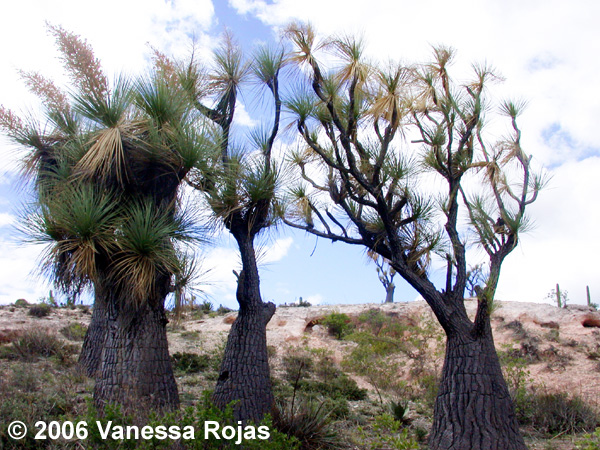
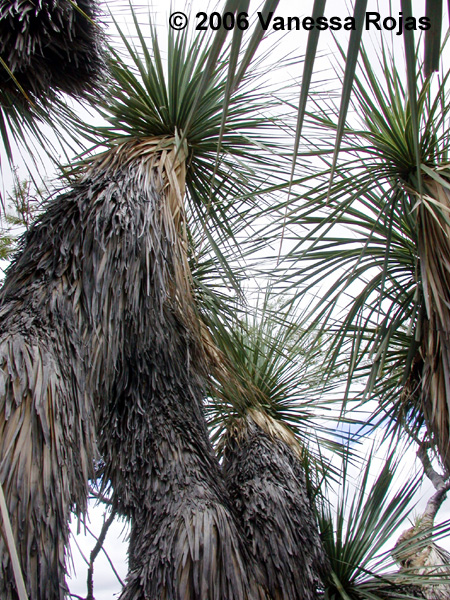
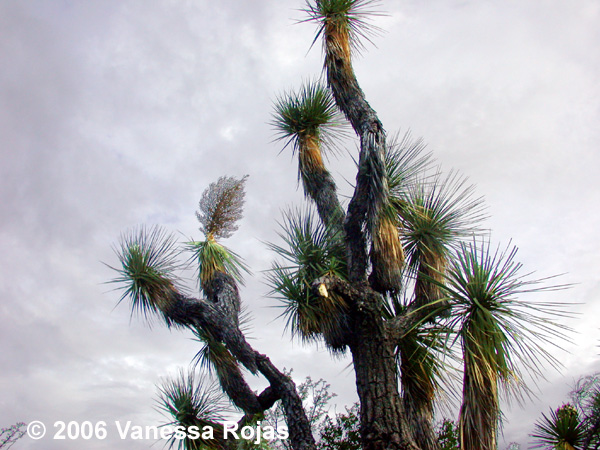
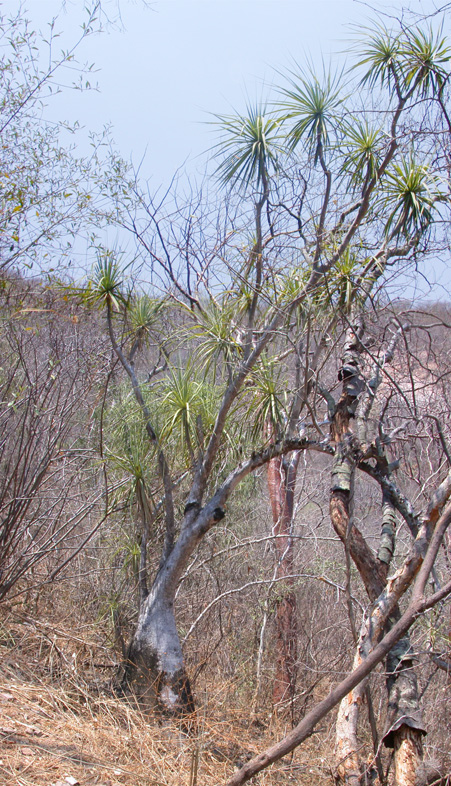
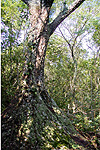
This species is the most
commonly cultivated
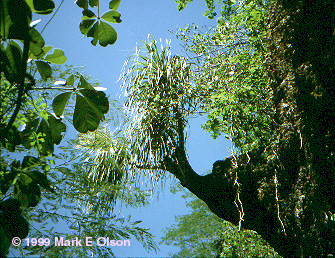
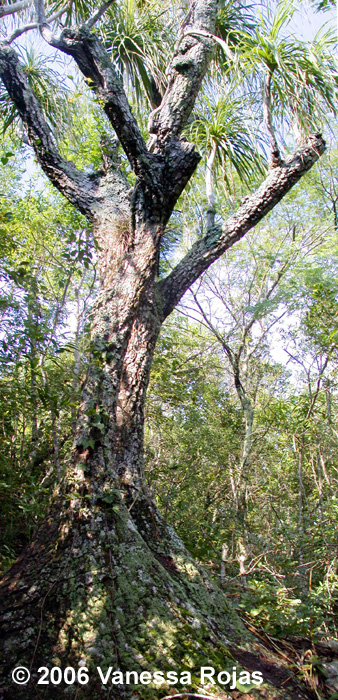
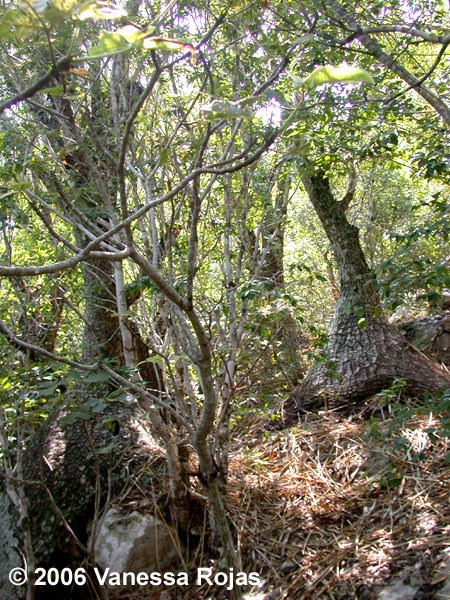
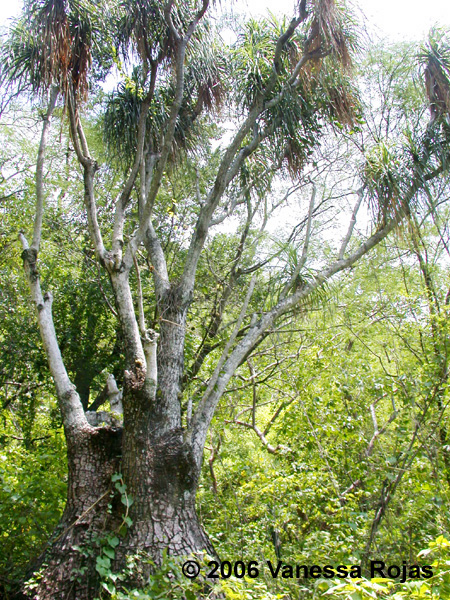
member of the clade. It is a striking member of seasonally dry tropical
forests of various parts of Mexico, mostly in the area of the Eastern
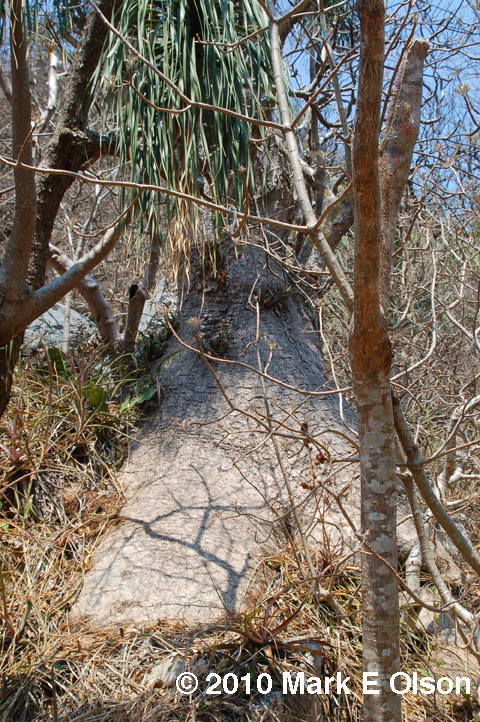
Sierra Madre. Individuals of this species can reach more than 14 meters
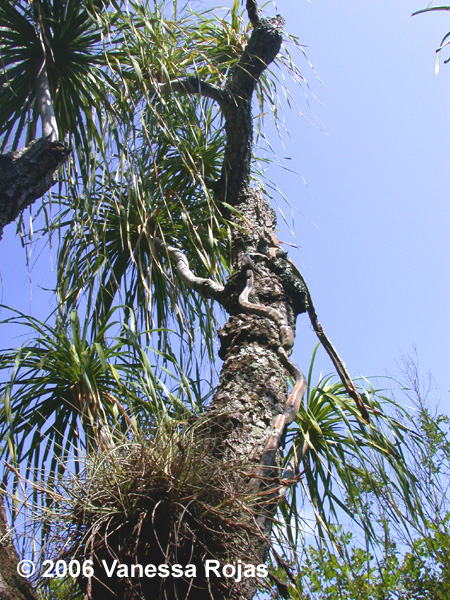
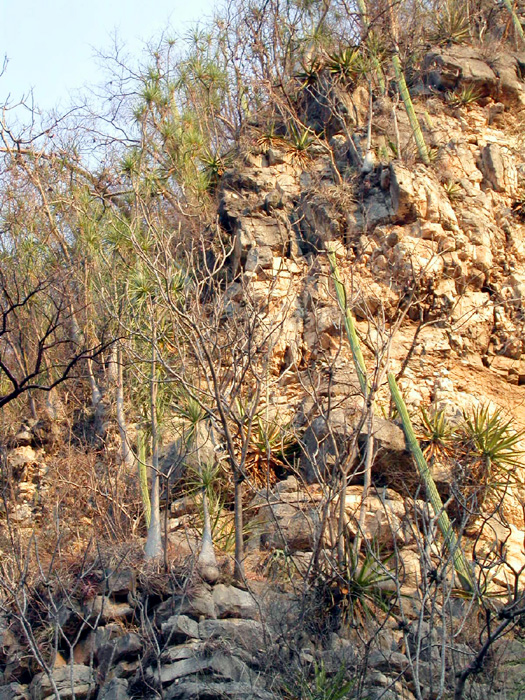
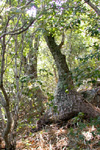
in circumference! This species can grow on vertical rock faces, as at
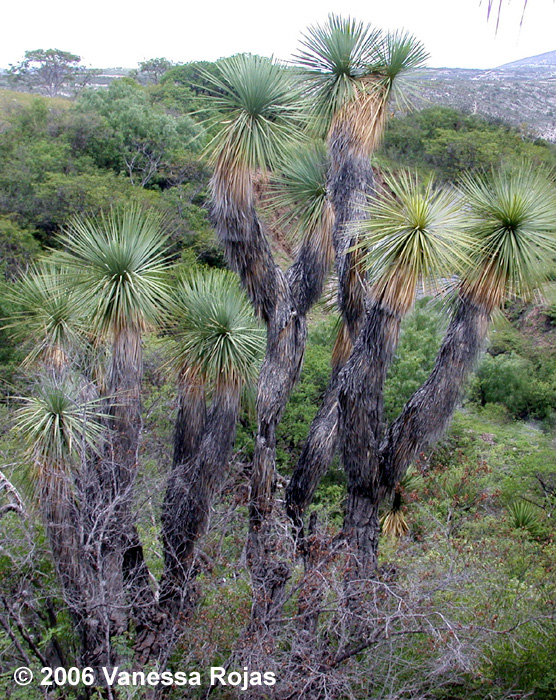
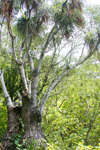
left, or lend a surreal effect to dense woods on flat ground, as below.
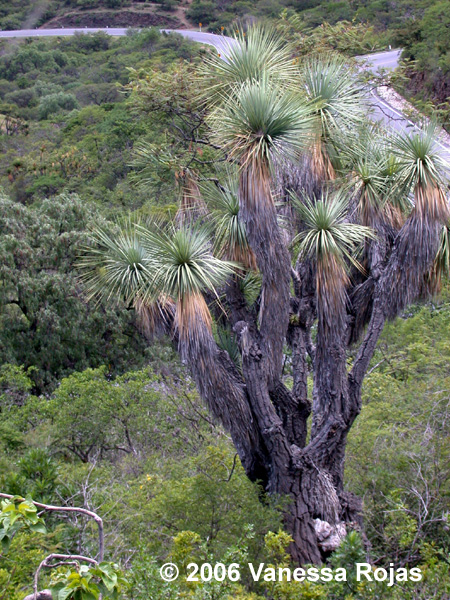
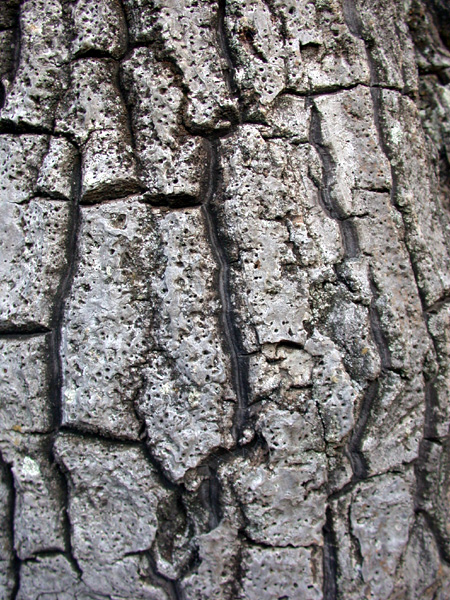
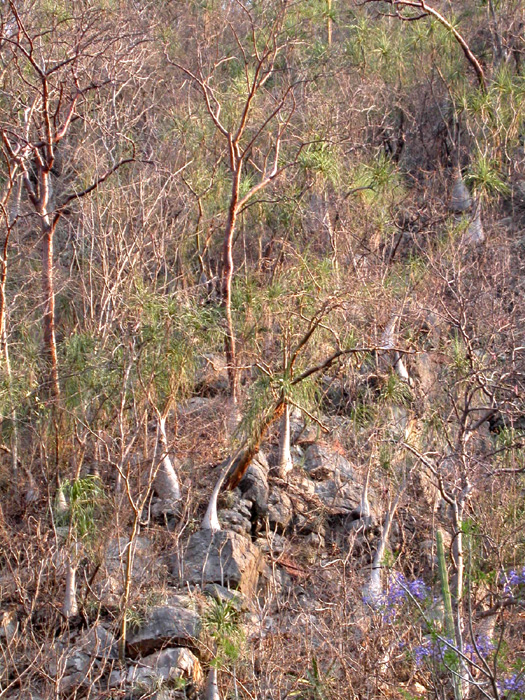
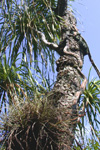
In many cases, the stems are covered with lichens, mosses, and
epiphytic bromeliads and cacti, as at below right.
|
|
|
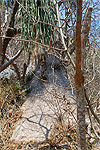 |
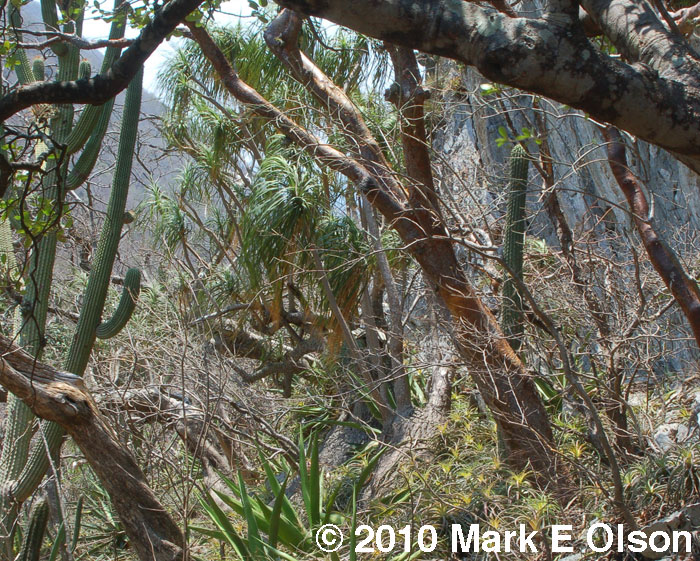
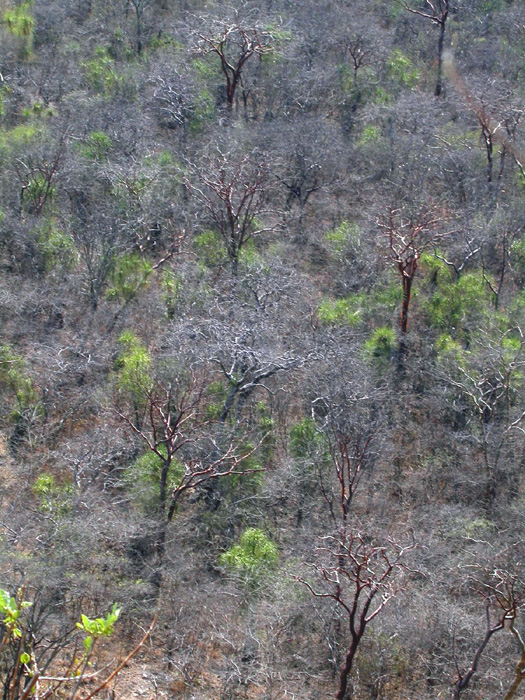
Oaxacan populations of Beaucarnea recurvata tend to have especially thick trunks. The photos here are from a very dense tropical dry forest with very fat but short B. recurvata, the columnar cactus Neobuxbaumia scoparia and an understory of the terrestrial bromeliad Hechtia. |
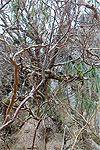 |
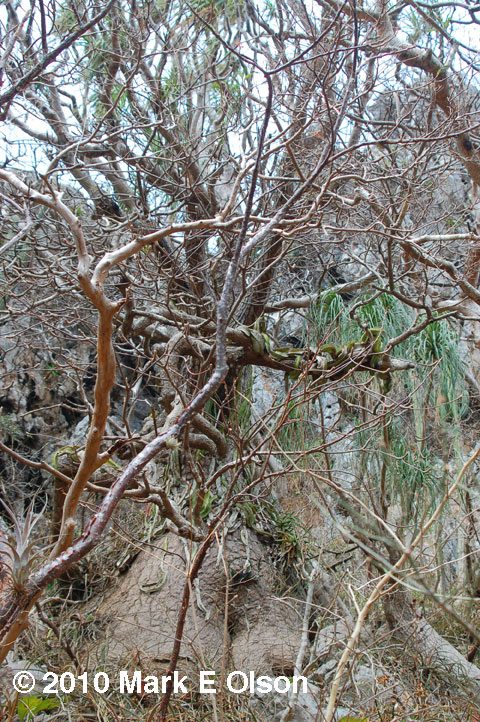
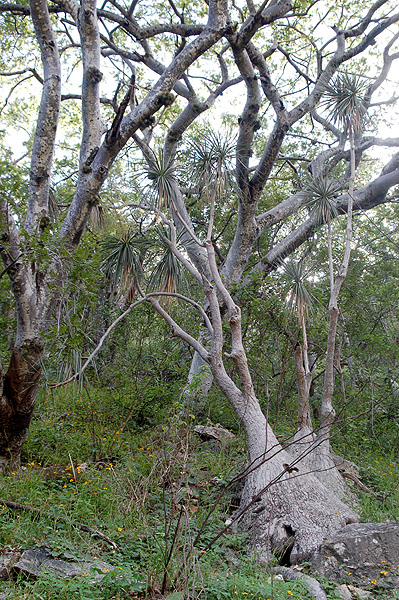
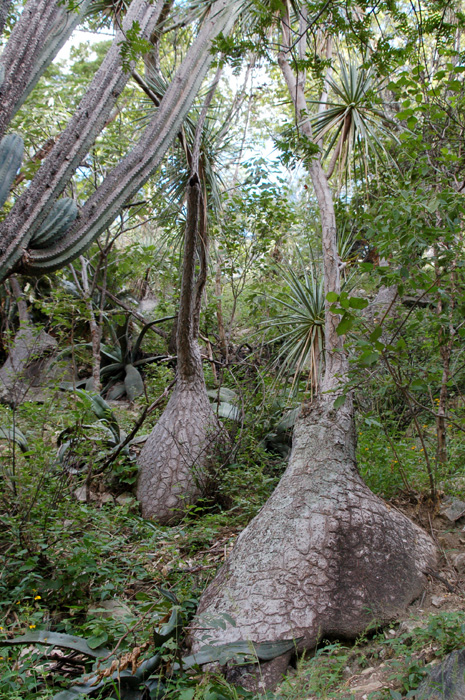
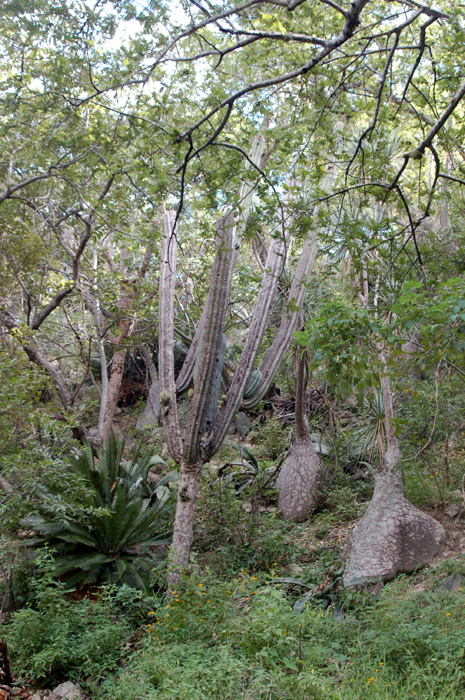
The forest in this area is so dense that it is hard to take photos that do the plants justice. Rather than a clear view, it is more common to see the giant Beaucarneas as apparitions through tangles of branches. The individuals in this population are often 10 meters in circumference and about the same height! This image shows one large Beaucarnea at center and a smaller one at right. |
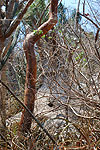 |
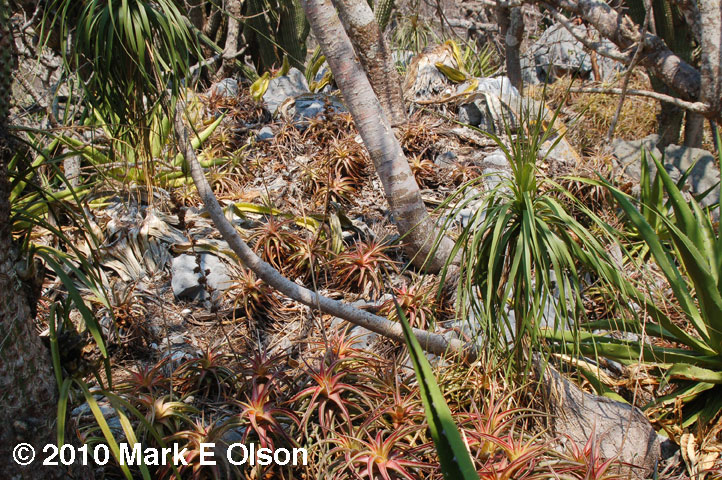
A massive individual of Beaucarnea recurvata growing with Bursera ovalifolia and Neobuxbaumia scoparia with Hechtia in the foreground. This image was taken toward the end of the dry season. You can see the Hechtia leaves curled from the long drought and other plants leafing out in anticipation of the rains. |
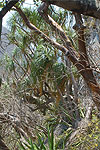 |
A view of the incredibly dense and spectacularly varied forest that these plants grow in. |
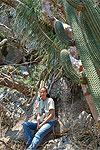 |
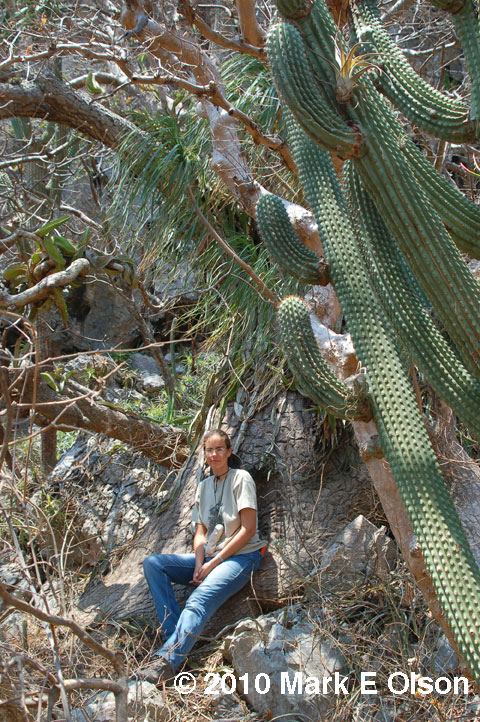
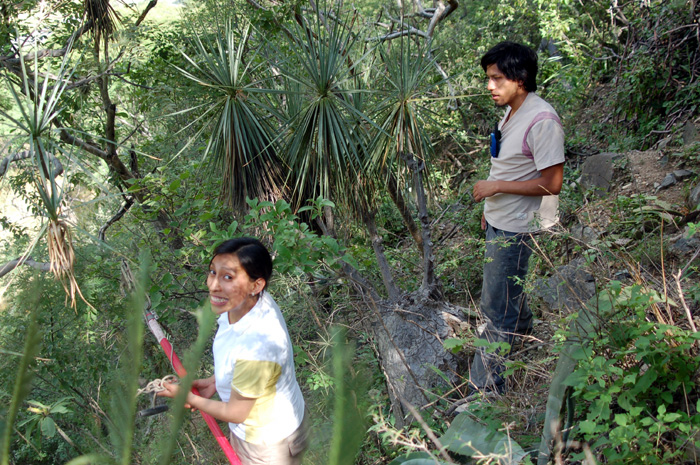
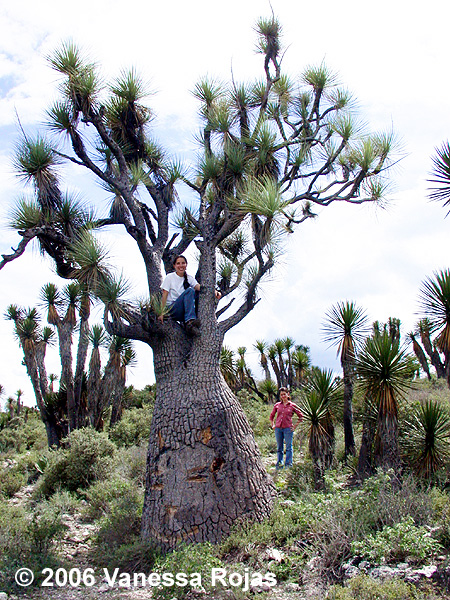
Beaucarnea recurvata in the wild in Oaxaca, with Julieta for scale. You can get an idea of the size of the massive conical trunk of these plants, and of the relatively short branches of these individuals. The cactus at right is Neobuxbaumia scoparia. |
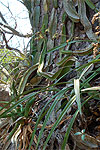 |
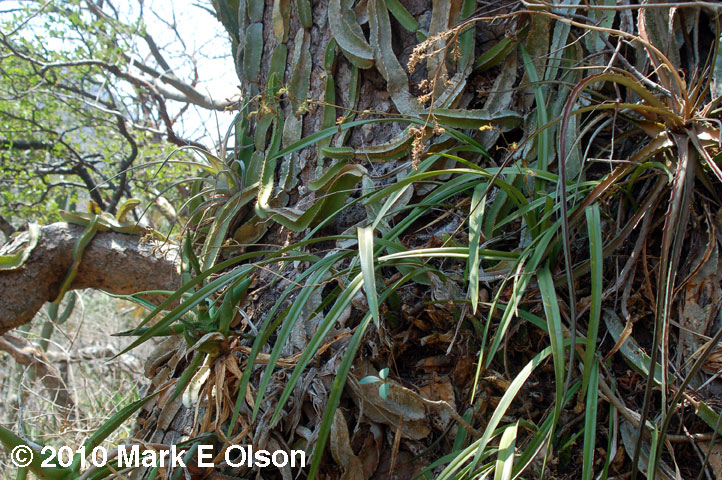
The trunk of Beaucarnea recurvata is often swathed in epiphytes. This large individual had its trunk carpeted with the cactus Selenicereus testudo, along with agaves, orchids, bromeliads, and even a seedling of Plumeria. |
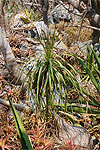 |
Because they are so avidly removed by collectors and nurserymen, it is very rare to find Beaucarnea populations that still have small individuals. This population is within a well protected patch of tropical dry forest and is remarkable for still having small plants. This image also shows the carpet of pink Hechtia that makes walking in these woods difficult . |
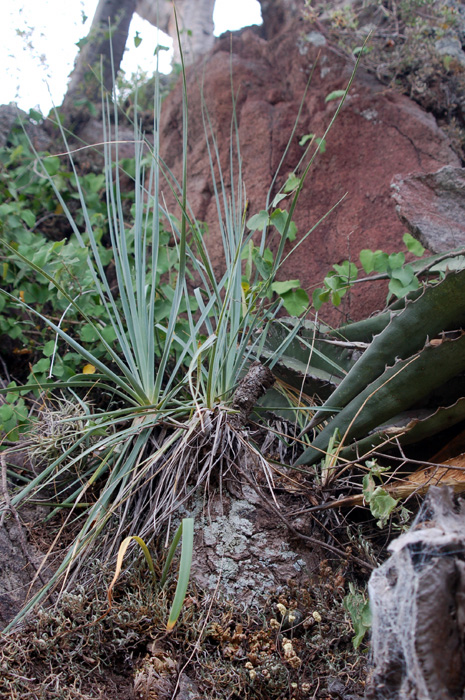
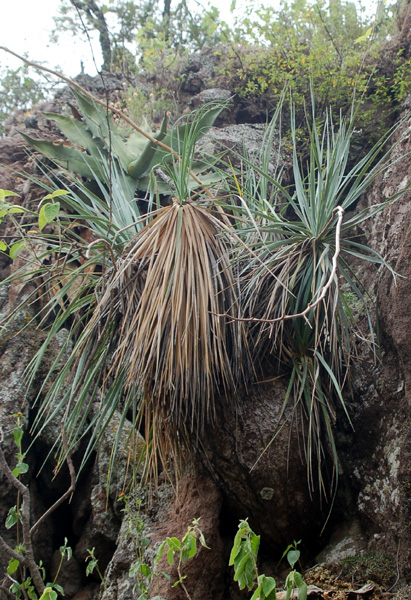
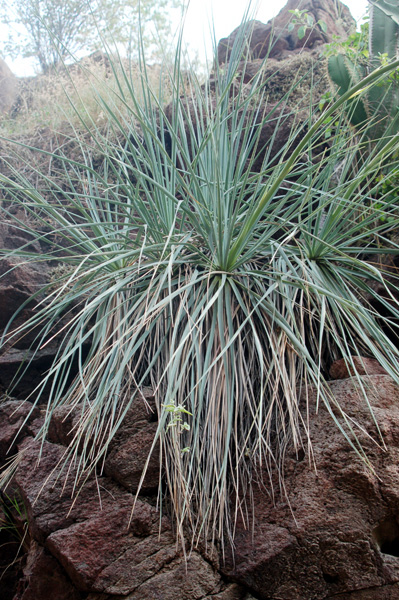
Beaucarnea stricta
|
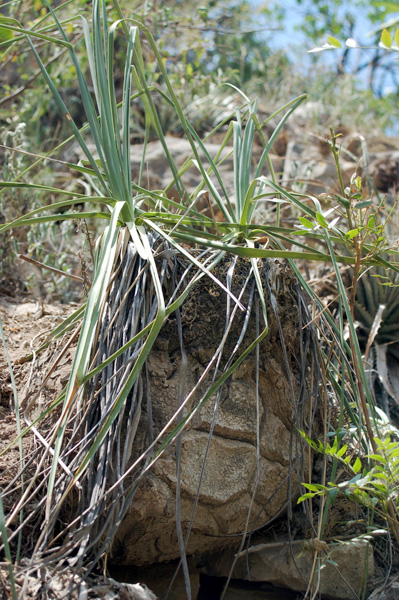
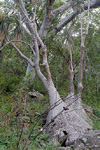
This species is smaller
than B. recurvata, and grows
in much drier tropical forest. It typically has a very thick base and
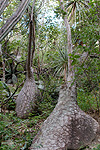
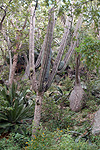
several spindly branches with tufts of bluish leaves. Fairly large
individuals are shown in the two photos at left. The branches may die
back to the base, leading to strange-looking individuals such as the
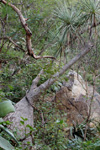
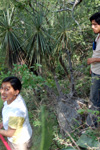
one being sampled by Alan and Jessica, below. Like many Beaucarneas, this species often
grows on steep hillsides, in this case with massive columnar cacti and
groves of huge cycads.
|
 |
|
Beaucarnea gracilis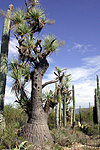
|
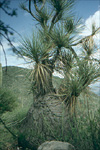
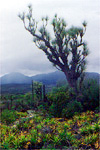
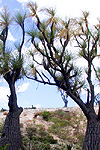
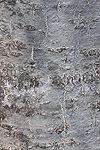
Endemic to the
Valley of Tehuacán, this species has bark that would look at
home on a pine tree. This species grows in dry tropical scrub and has
very narrow, stiff bluish leaves. One study suggests that Beaucarnea
gracilis is having a hard time in the wild, since too many people
are digging up the small plants to use them as ornamentals: Cardel, V.
1997. Ecological status of Beaucarnea gracilis, an endemic
species of the semiarid Tehuacan Valley, Mexico. Conservation Biology
11 (2): 367-374.
|
 |
 |
Beaucarnea purpusii
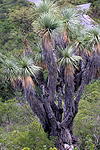 |
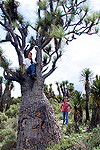
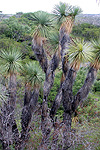
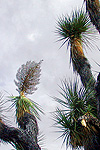
As is the above species, B. purpusii is restricted in its
distribution to a few relatively high dry tropical localities. It is
remarkable for being highly branched, often with many stout trunks and
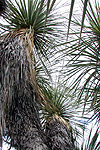
a relatively slender base. The leaves of
this species are broader than those of B. stricta, which grows nearby, and
can accumulate along the
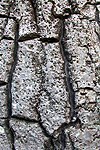
branches in very dense, long-lived mats. Like the other dryland species
of the clade, the bark of B.
purpusii is very thick and furrowed.
|
|
|
Beaucarnea goldmanii
|
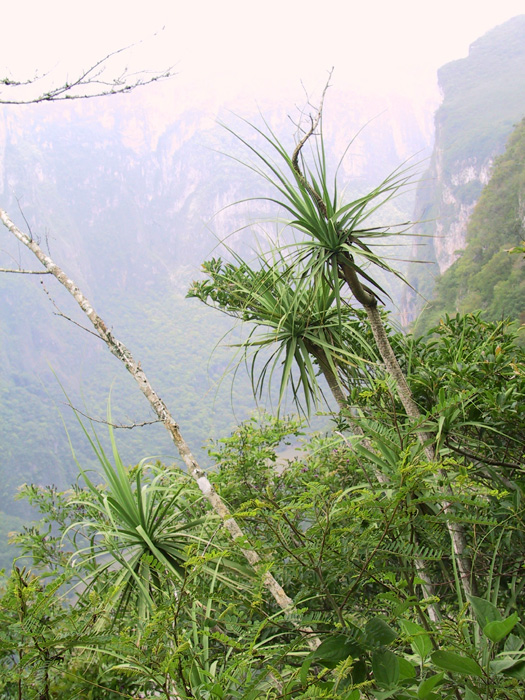
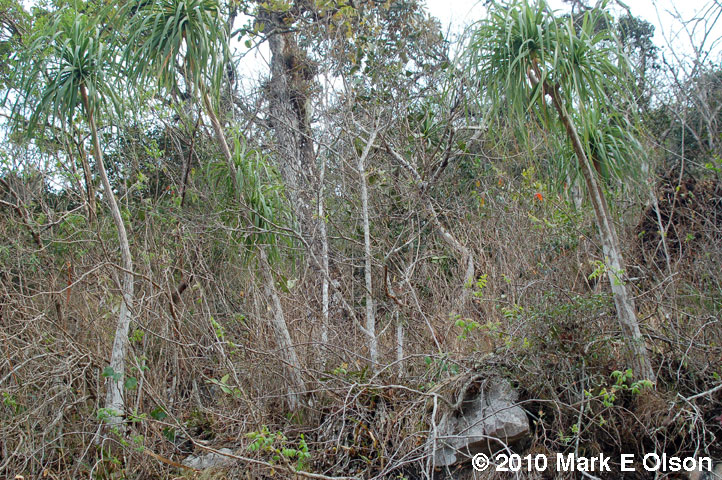
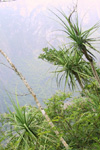
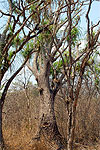
This species grows in dense
woods, where its tall, slender stems poke above the
canopy in rocky areas. The individual shown at left was growing on an
exposed rock face in dense scrub on the walls of the Sumidero Canyon in
Chiapas. In contrast to many other members of the clade, the leaves of B. goldmanii have relatively few
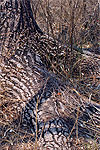
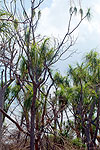
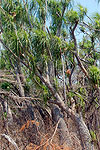
adaptations for dealing with drought. The dense grove of B. goldmanii in the photos below is
from the dry central depression of Chiapas.
|
|
|
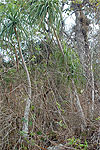 |
This population of Beaucarnia goldmanii was growing in dense dry tropical forest on a steep limestone slope. The plants were much smaller than in the grove shown above. |
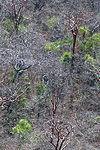
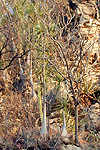
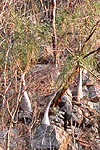
Beaucarnea hiriartae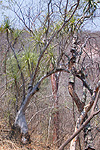 |
This species was described
in the early 90s, despite growing in an area that is relatively well
known floristically. That remarkable novelties continue to come to
light in Mexico is illustrative of the richness of its flora. This
species grows on very hot, rocky hillsides in lowland dry tropical
forest of the interior of Mexico. It is a relativaly small species, and
has much thinner bark than most of the other species. On relatively
deep soil, it may reach heights of 5-6 meters, but on exposed rock, the
plants may be half that height.
|
 |
|
Beaucarnea compacta
|
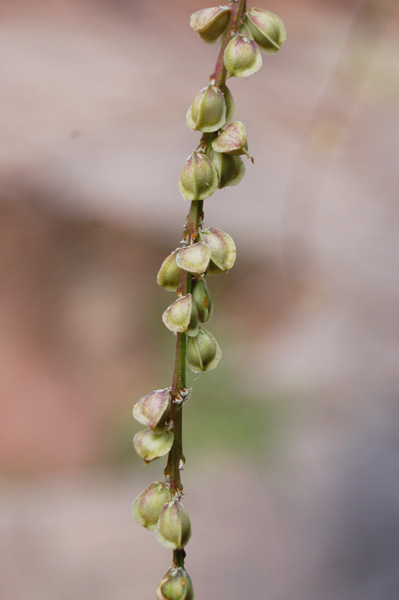
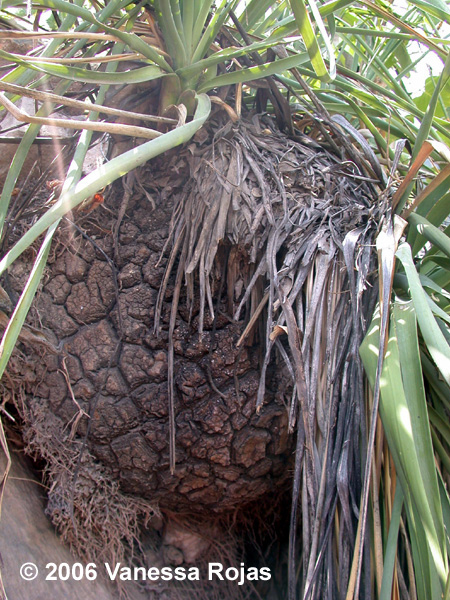
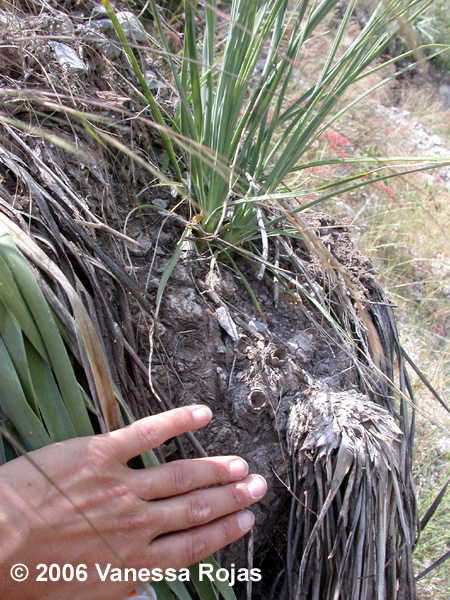
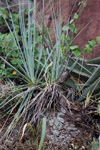
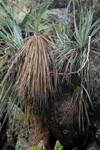
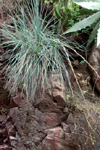
The smallest member of the
genus, this species usually has its leaves in sessile or nearly sessile
rosettes springing directly from a large globular basal stem. In some
cases, as in the two images at left, leaf rosettes are borne on short
stems; the individual at lower right had the longest stems that we have
encountered. The three photos below show various aspects of a large
plant in fruit. Note the long, pendant flower stalk and the way the
leaves cover the stem in a dense mat.
|
 |
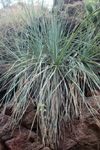
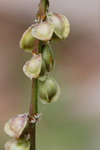
|
Calibanus hookeri
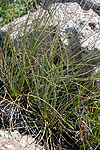 |
Uncharitably named for the
monster in Shakespeare's The Tempest,
this species is widespread in the tropical southern extensions of the
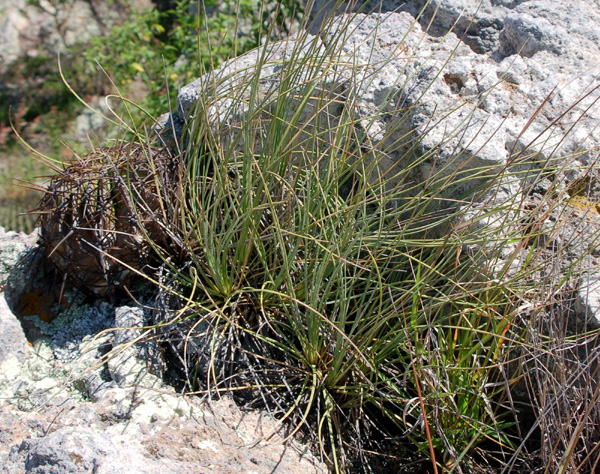
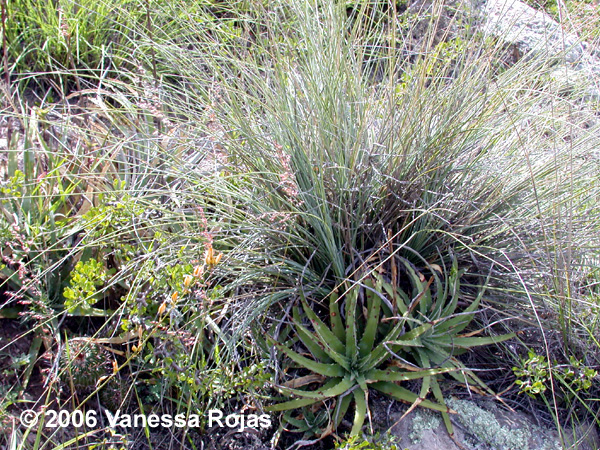
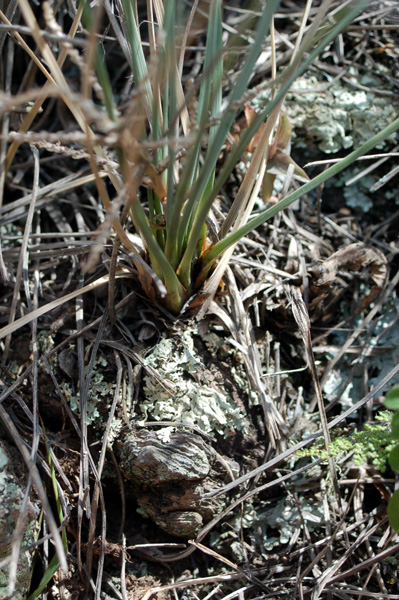
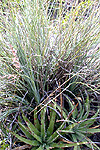
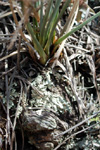
Chihuahuan Desert. Like the above species, Calibanus hookeri has a large,
globular stem with rosettes of slender, stiff bluish leaves scattered
directly over its corrugated surface. In C. hookeri, the stem is largely
below ground. The above ground parts of the stem are usually protected
beneath a dense thatch of leaves. It often grows with cacti, as at
lower left, or with the bromeliad Hechtia,
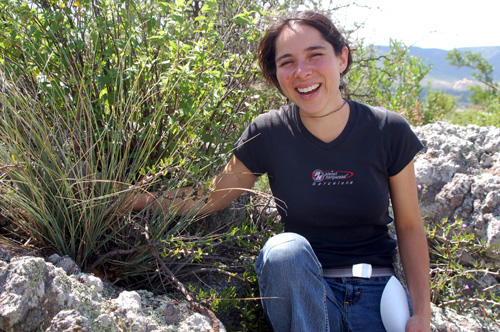
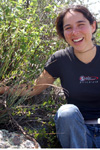
below. This clade forms part of the thesis project of Vanessa Rojas,
below right.
|
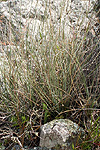
|
 |
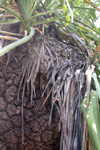
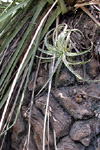
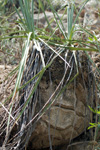
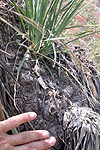
Calibanus glassianus
|
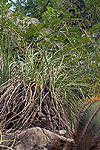
The other species known
from the genus Calibanus, C. glassianus differs conspicuously
from C. hookeri in its stem,
which is largely above ground. The bark of C. glassianus varies from large
plates to small protruberances. Like C.
hookeri, the rosettes of leaves of this species almost always
emerge directly from the surface of the globular stem, without any
elongated trunks. Perhaps the most striking thing about
this species is its incredibly close resemblance to B. compacta. Ongoing phylogenetic
studies will reveal valuable information regarding the relationships
within this remarkably varied clade.
|
|
|