
Bursera grandifolia
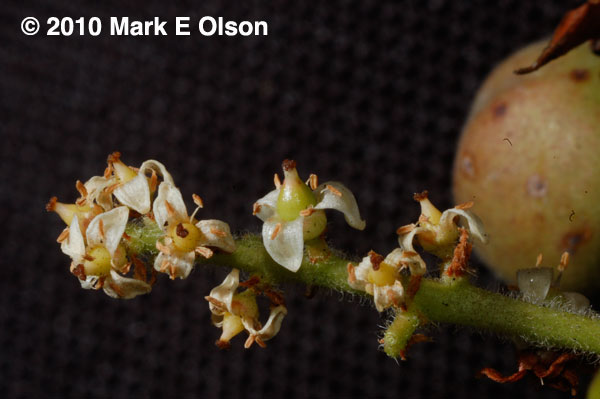
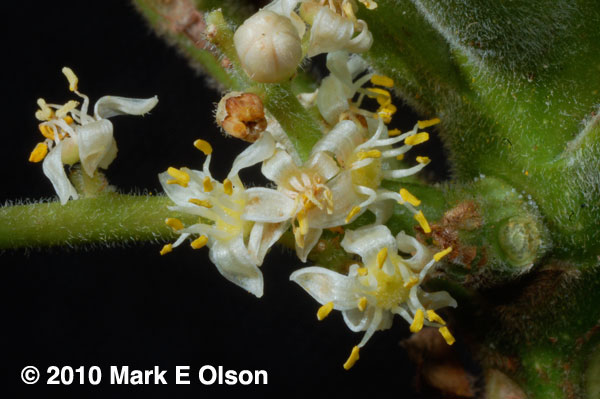
Bursera instabilis
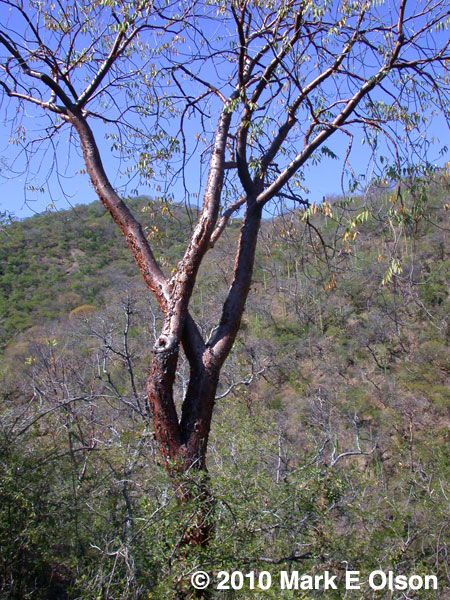
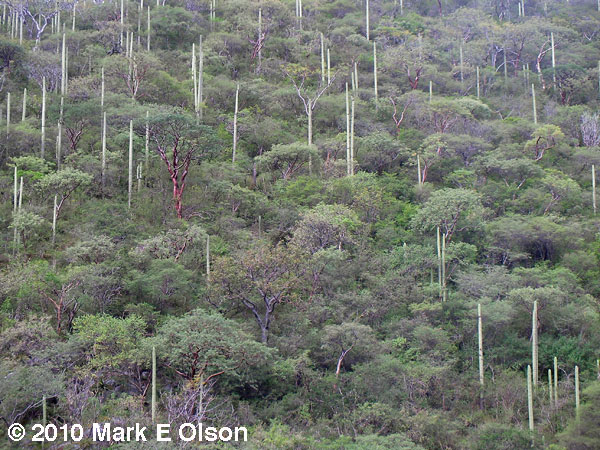
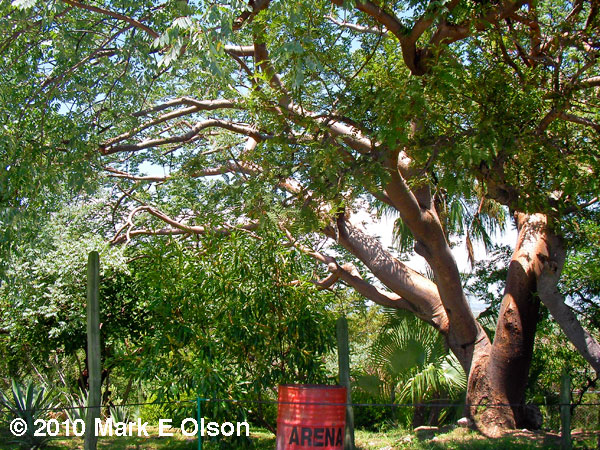
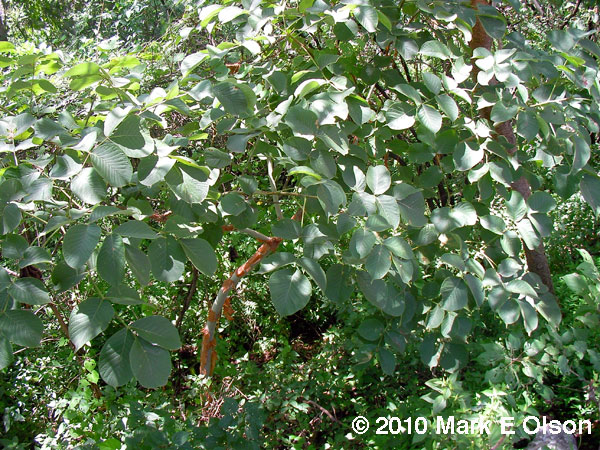
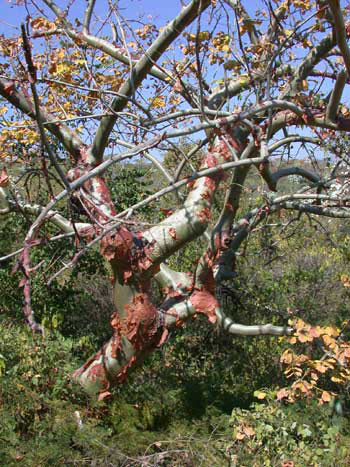
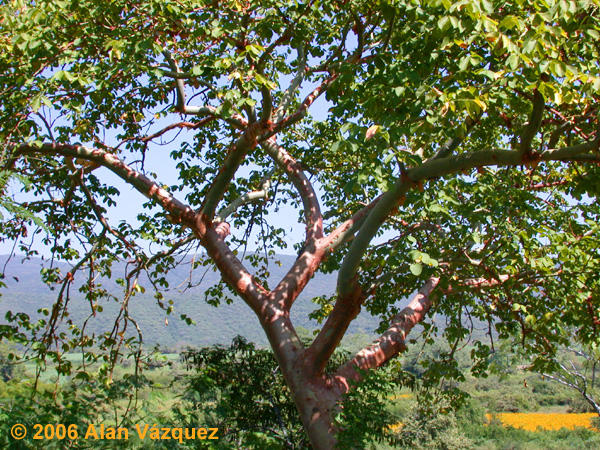
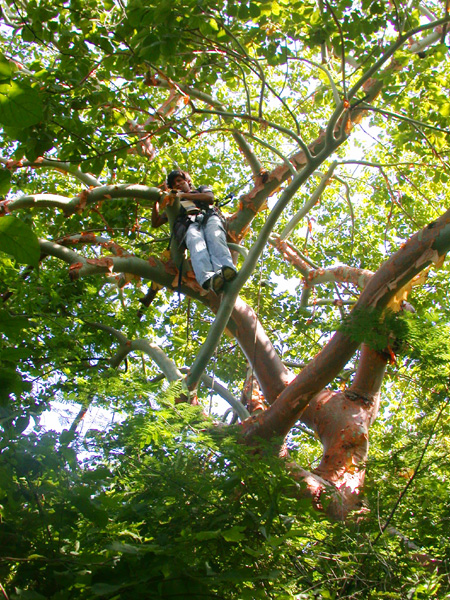
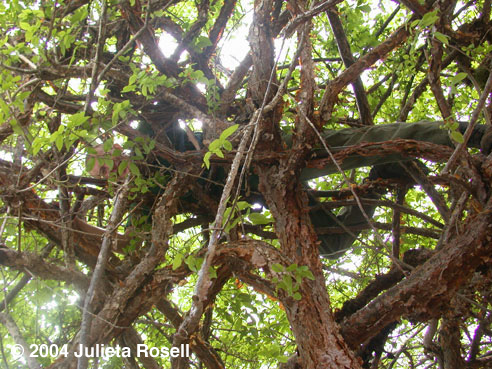
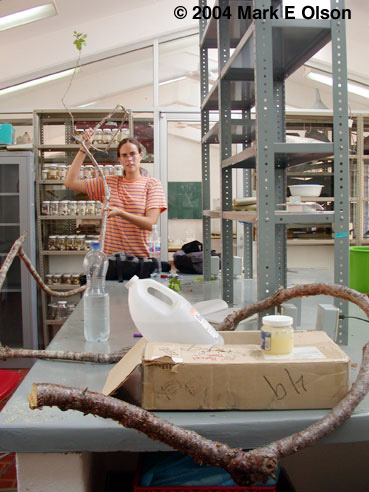
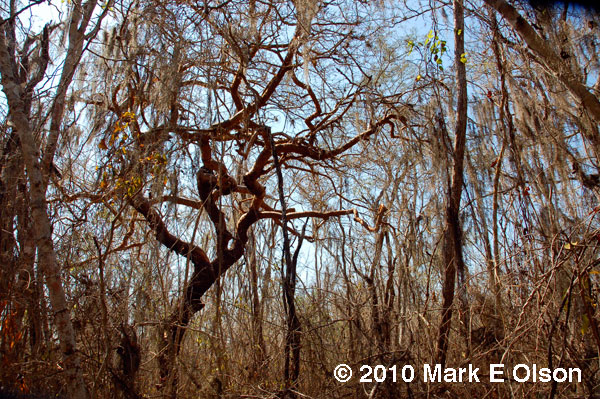
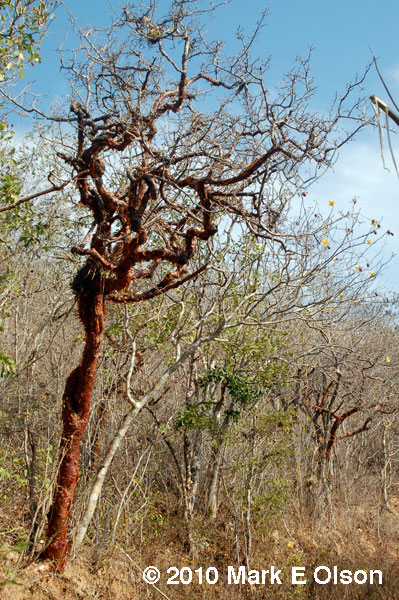
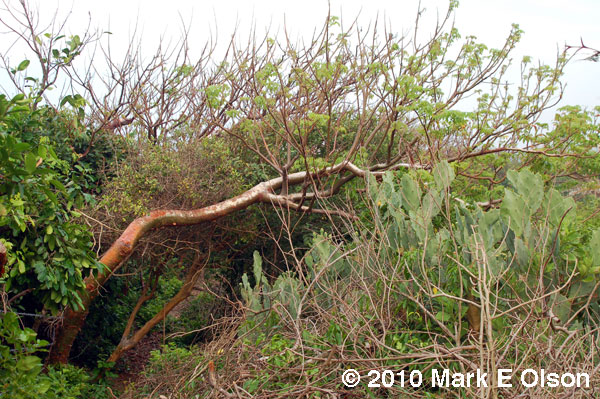
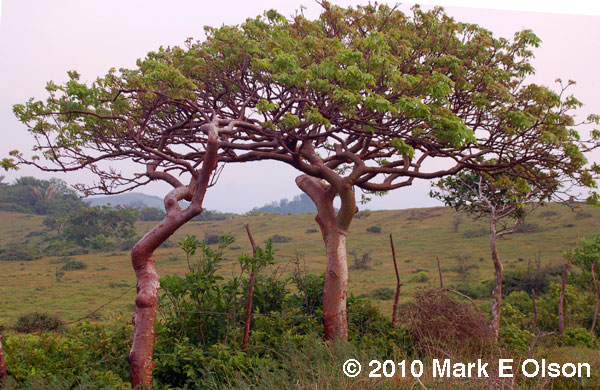
This strange species from western Mexico begins life like a normal tree, with a conventional trunk and branches that all support their own weight (left). With age, the branches begin to grow back on themselves, growing around and around within the crown of the tree. These branches rest on earlier-formed, self-supporting branches, much in the way that a liana would. One such branch removed from the tree is shown at right. It was 8 cm in diameter and 4 meters long!
Bursera arborea
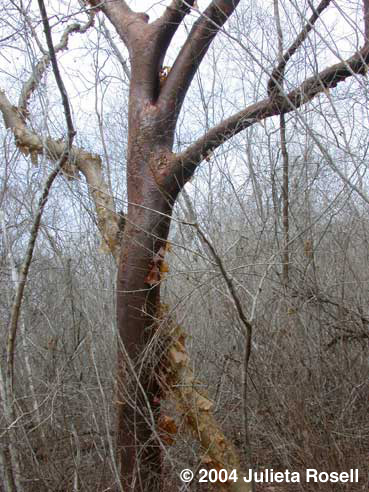
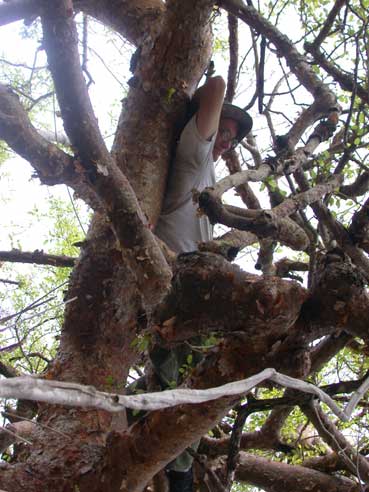
This species is remarkable in the simaruba clade for being the species with the thinnest twigs. Whereas all of the other species have very thick twigs, the young shoots of B. arborea are remarkably slender. The species is found in tropical dry forest on the Pacific coast of Mexico. These photos were taken in Jalisco state.
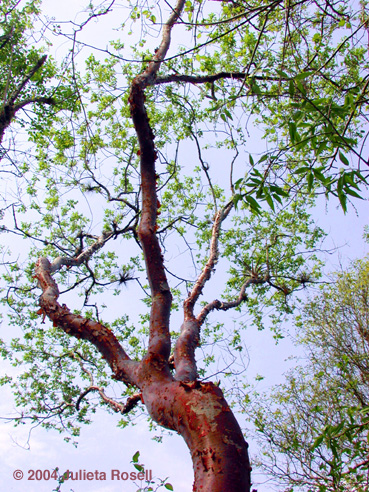
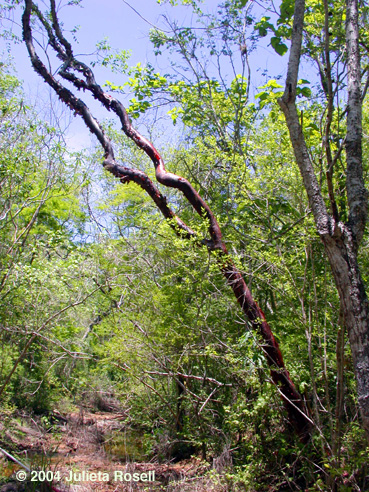
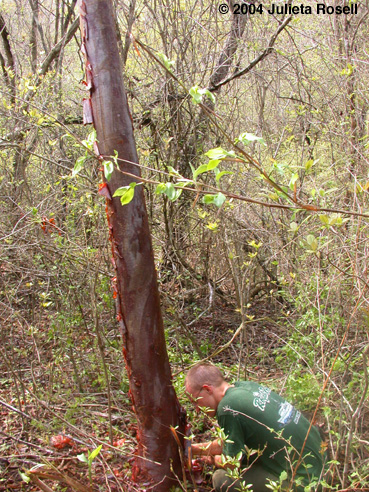
Bursera cinerea
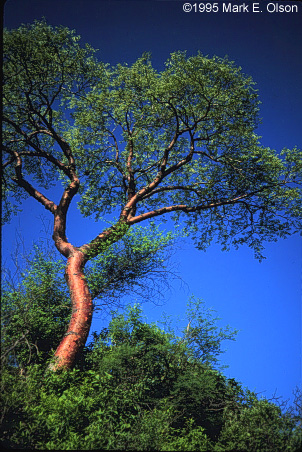
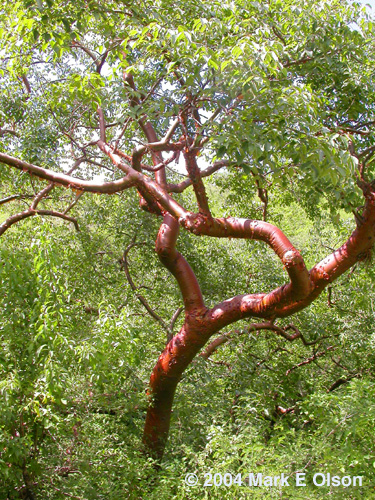
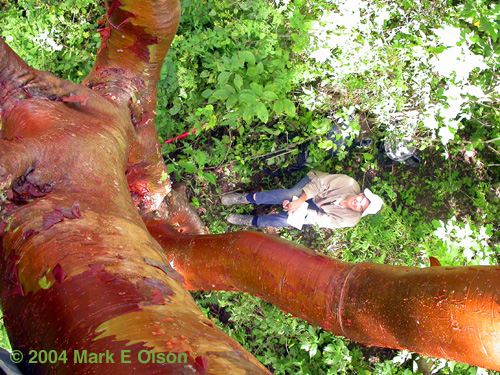
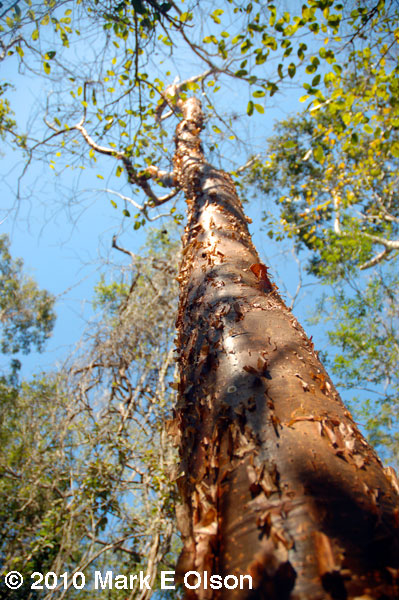
This species grows on the fringes of lowland dry tropical areas, at the transition to moister highland vegetation in Oaxaca and Veracruz. These magnificent trees are particularly striking for the deep red color of their trunks, which are an amazing sight sprawling in deep, shady canyons, as at left, or ascending in open forest, as at right.
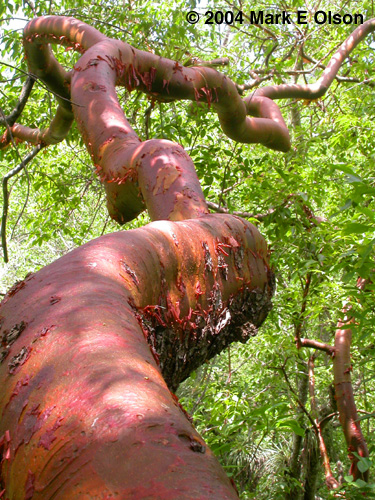

Bursera roseana
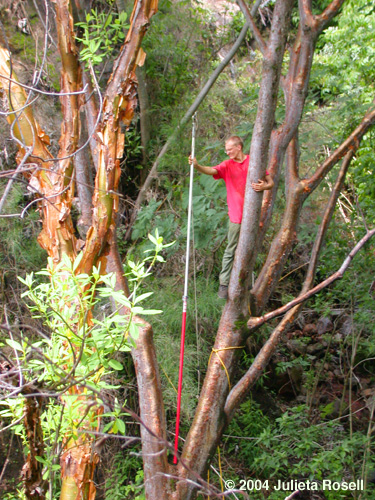
Another large, B. simaruba-like tree, this species was formerly known as Terebinthus acuminatus. Like some other members of the simaruba clade, this species grows in moist canyons in the transition zone between highland pine-oak forest and lowland tropical subdeciduous forest. It is very hard to tell apart from B. simaruba and B. attenuata.
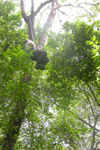
Bursera attenuata
This species is similar in many respects to B. simaruba, differing in some leaf characteristics. It grows in fairly tall, moist tropical subdeciduous forests of the Pacific coast of Mexico. In some places, it occurs very close to sharp transition zones, with pines and oaks growing just above a zone of broadleaf forest.

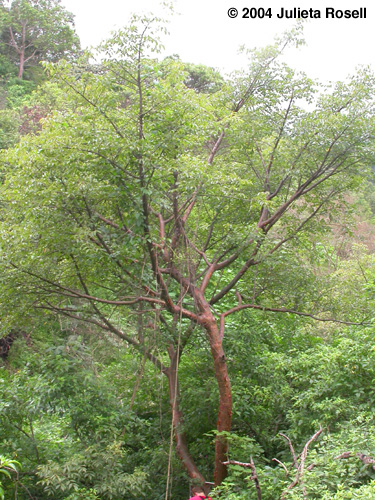
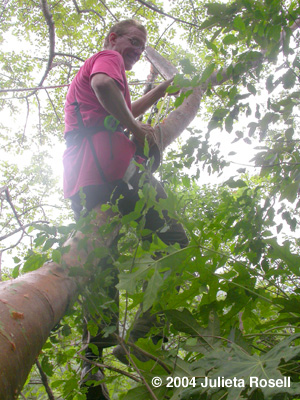
Bursera simaruba
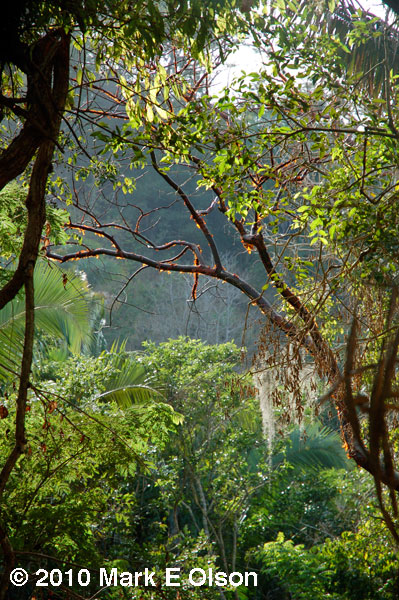
This is the most widespread species of Bursera, occurring from southern Florida and the Caribbean, along both coasts of Mexico to South America. The species is highly variable and is found in everything from tropical dry forest to tall rainforest. The images in the upper row are from rainforest on the Gulf coast of Mexico.
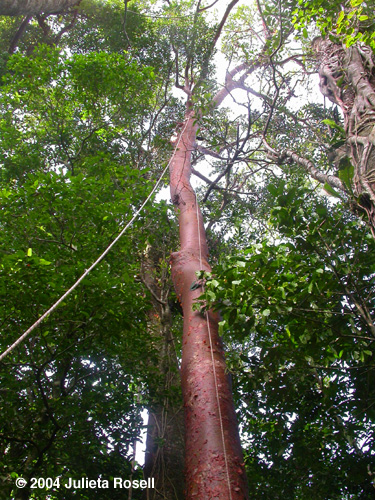
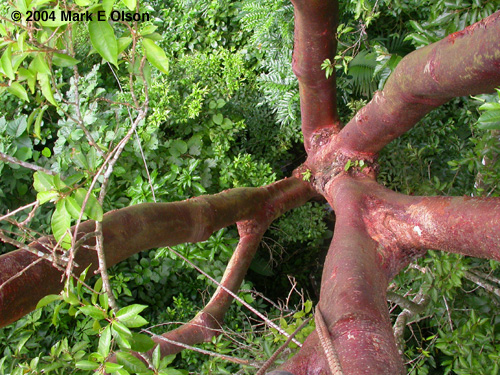
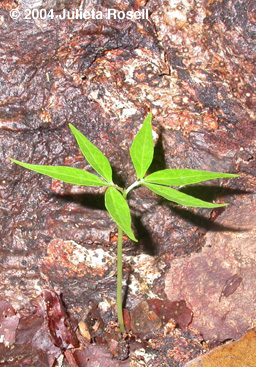
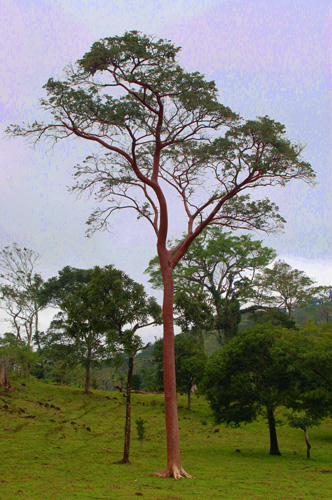
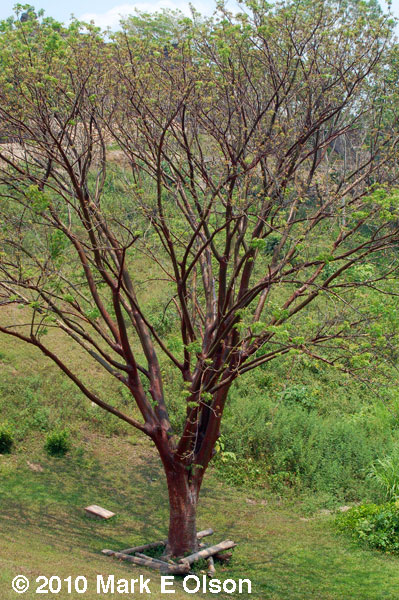
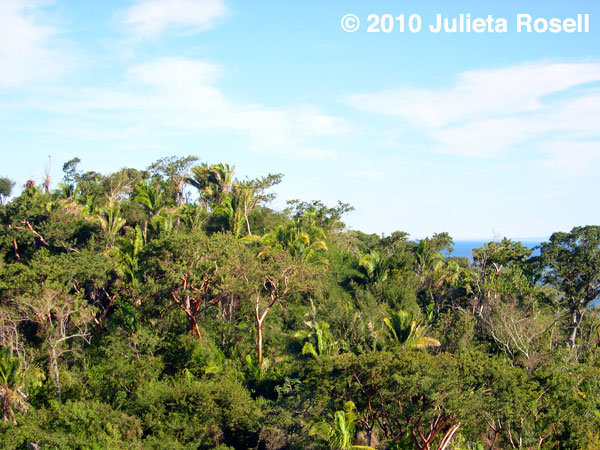
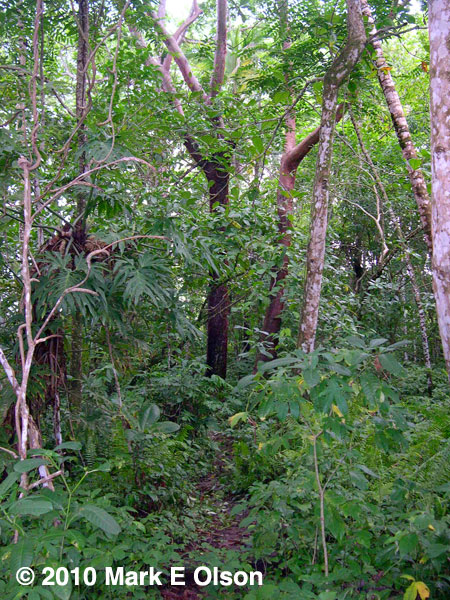
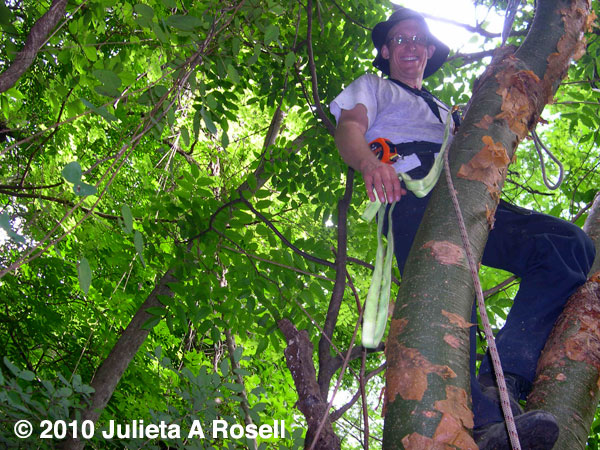

In Mexico, the Pacific and Atlantic populations of Bursera simaruba are widely separated. Where the land narrows in Central America, these plants can be found on both coasts very close to one another in very different forest types, from Caribbean slope rainforest to Pacific dry forest, as in these images are from Costa Rica. At left are trees from the Caribbean, at Cahuita, and at the Palo Verde research station on the Pacific in the two remaining images.
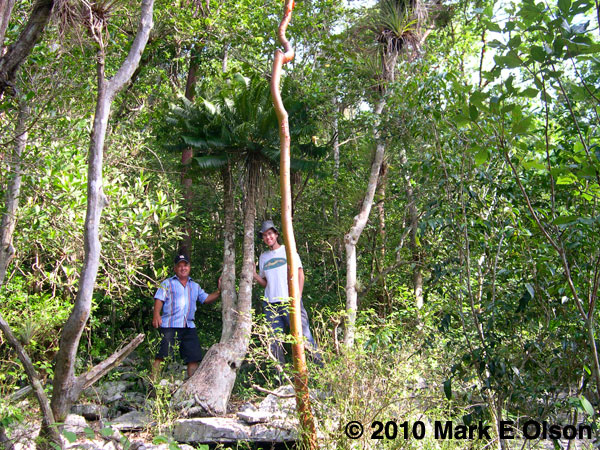


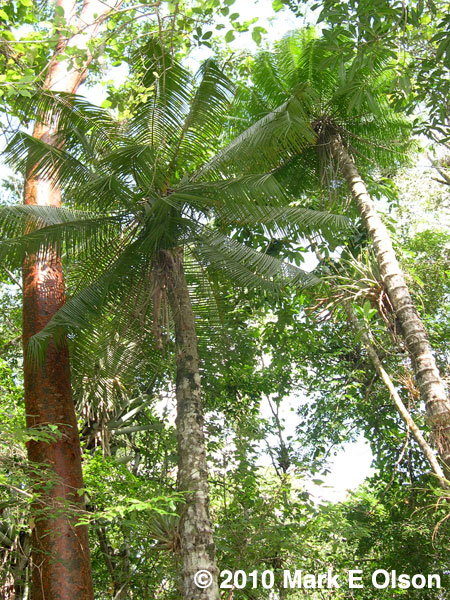
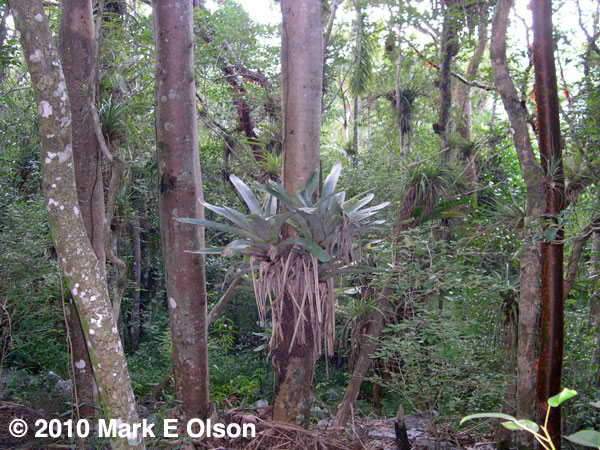
Bursera laurihuertae
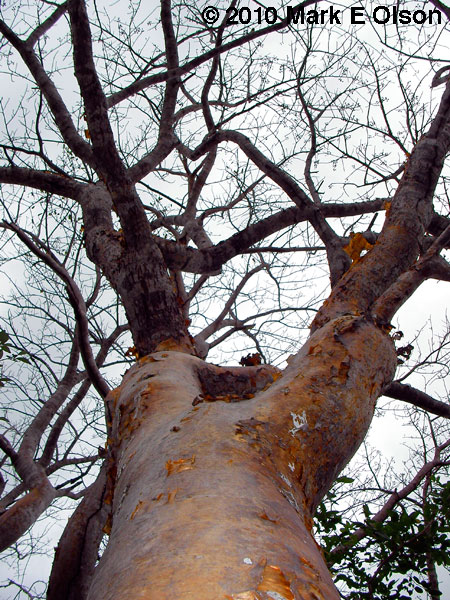
Our research shows that this enigmatic species is a member of the simaruba complex. It is endemic to the low, dense tropical dry forests of the southern Isthmus of Tehuantepec and is very distinctive for its rounded, leathery leaves that have just three or even only one leaflet.


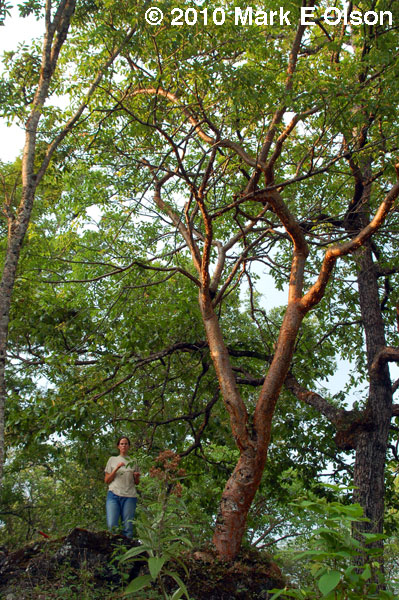
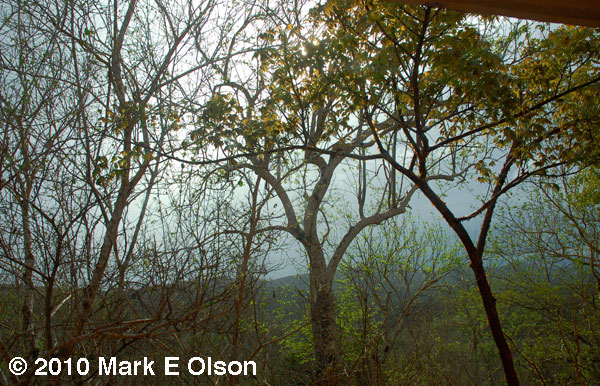
Bursera ovalifolia
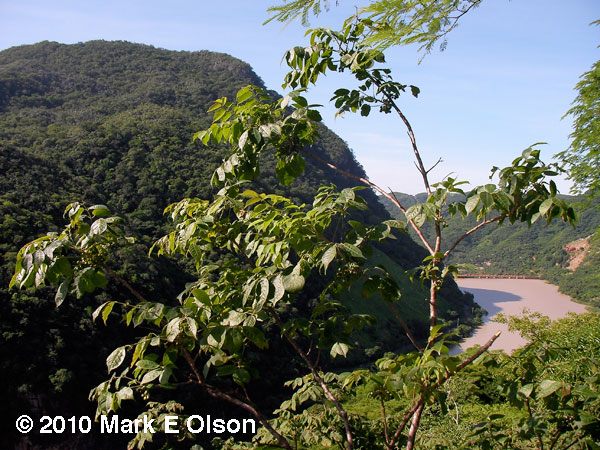
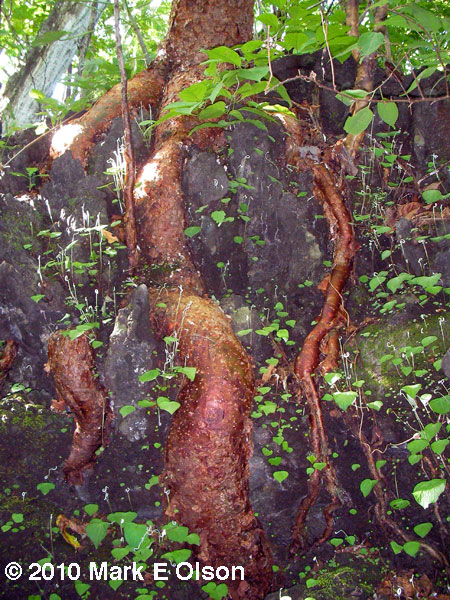
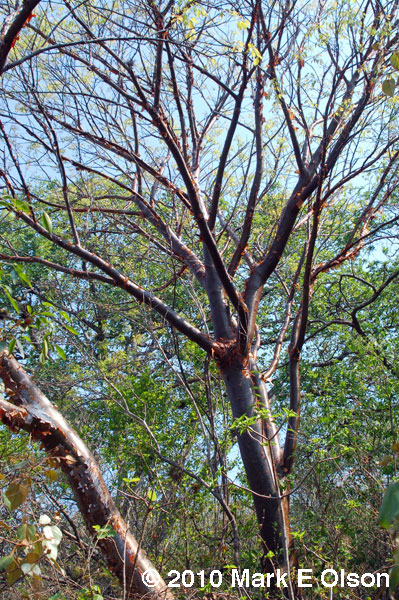
This species was only recently recognized as an entitiy distinct from Bursera simaruba. It grows in warm, rather moist tropical deciduous forests on the Pacific coast of Mexico. It is sometimes hard to tell from B. simaruba but has longer petiolules and much smaller fruits. The three photos on the left in the row below are from Guerrero; the one on the right is from the central dry depression of Chiapas.

Bursera krusei
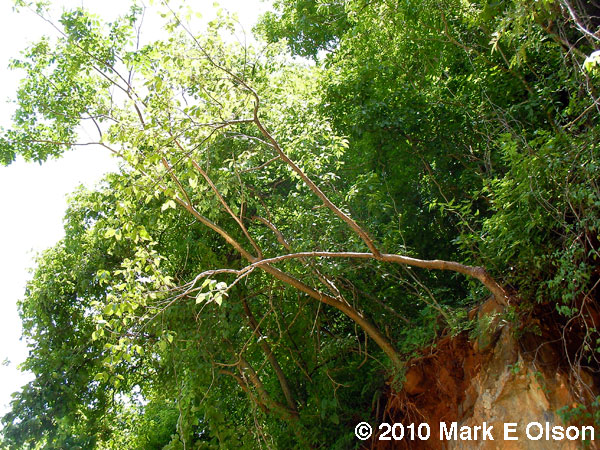
This species is very distinctive for its leaves with three large hairy leaflets. It grows in dry tropical forest in Guerrero and Oaxaca.
Bursera standleyana
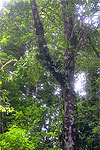
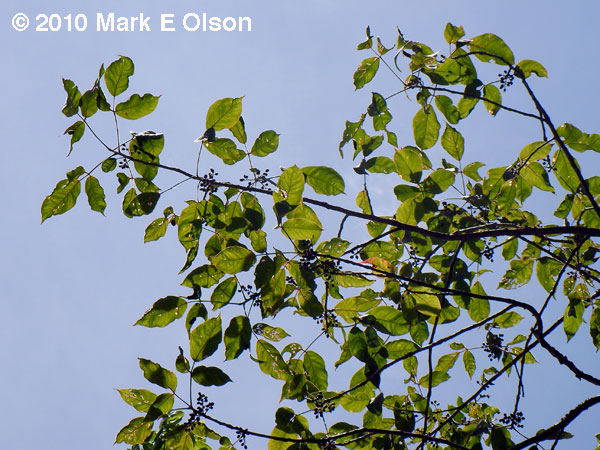
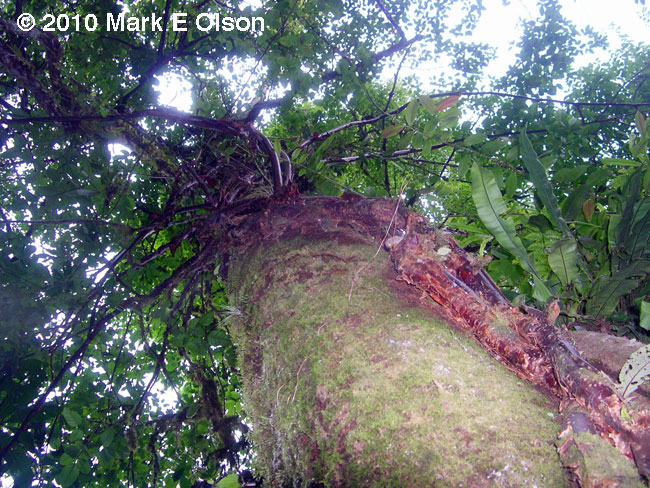
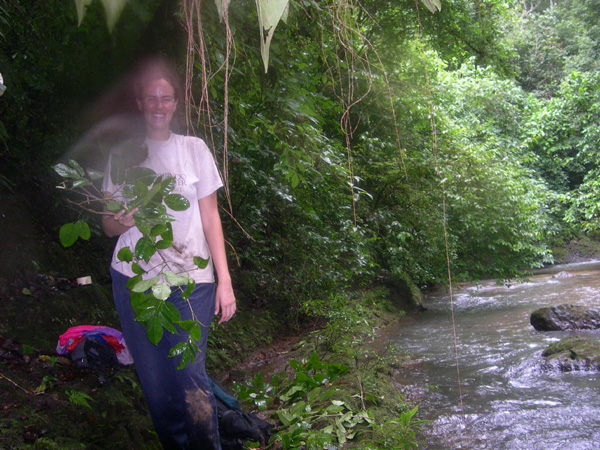
This remarkable species is a hemiepiphyte. That is, it grows high in other trees, but sends long, flexible, liana-like roots down to the forest floor. It is known only from the moist forest of the central and southern Pacific slopes of Costa Rica. In the photo with arrows, the upper arrow indicates one of the arching branches of B. standleyana and the lower one highlights the supporting tree. The leaves of B. standleyana can have five, three, or even just one leaflet.



Bursera shaferi